
Macro Photography
Dragonflies Holding to Thin Reeds
Photograph details
- Camera
- Canon_EOS_R5_Mark_II
- Lens
- RF100mm F2.8 L MACRO IS USM
- Exposure
- 1/400 sec
- Aperture
- f/4.0
- ISO
- 125
- Focal length
- 100 mm
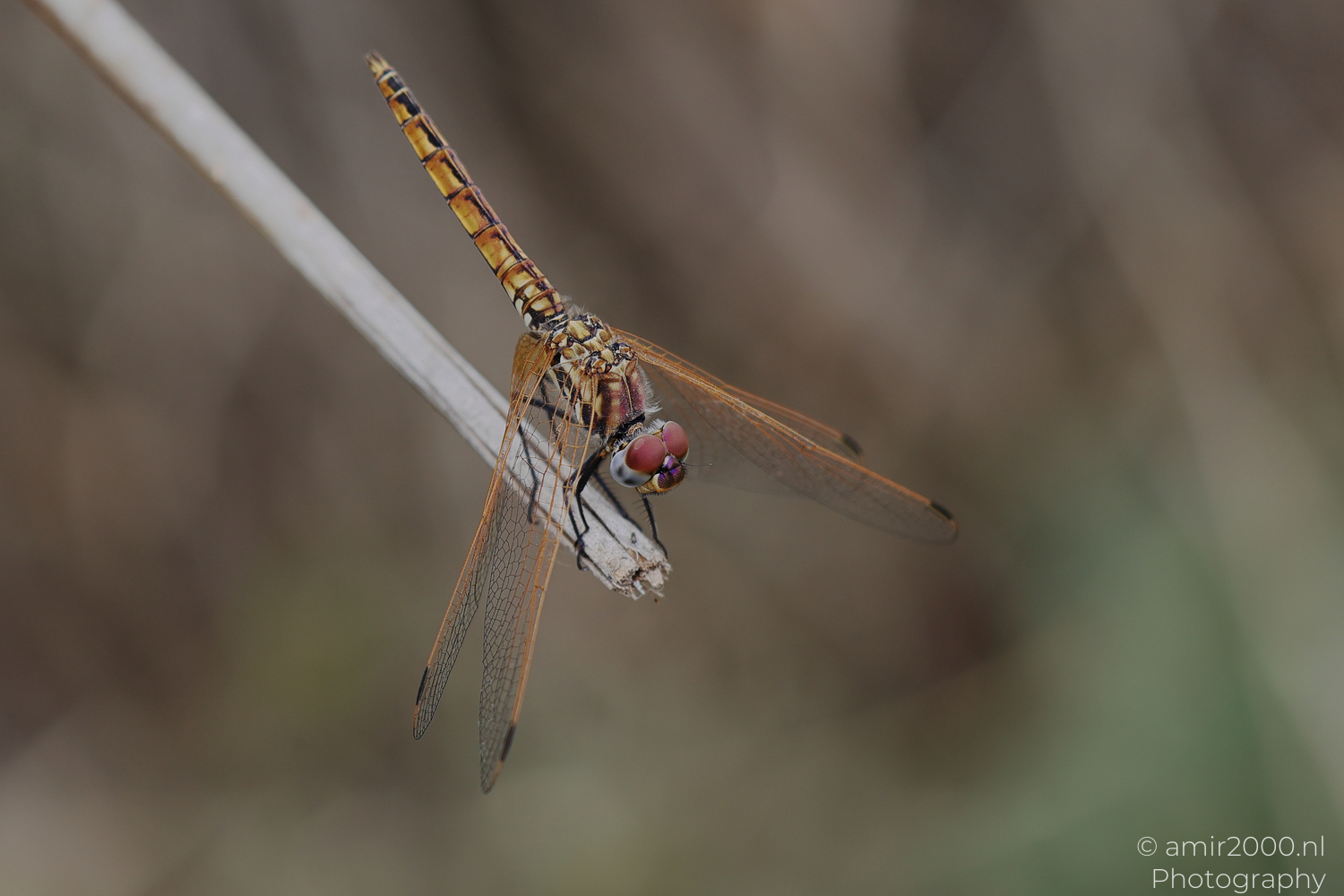
A mesh of wing veins caught the light before the rest of the dragonfly did. It was holding to a thin broken stem, its legs gathered around a surface barely wider than one of them. From that distance the body looked solid and patterned, but the wings were almost absent until their fine cells began to show. I stayed with that contrast: a segmented body resting on a stem only a few millimetres thick, surrounded by wings that nearly disappeared.
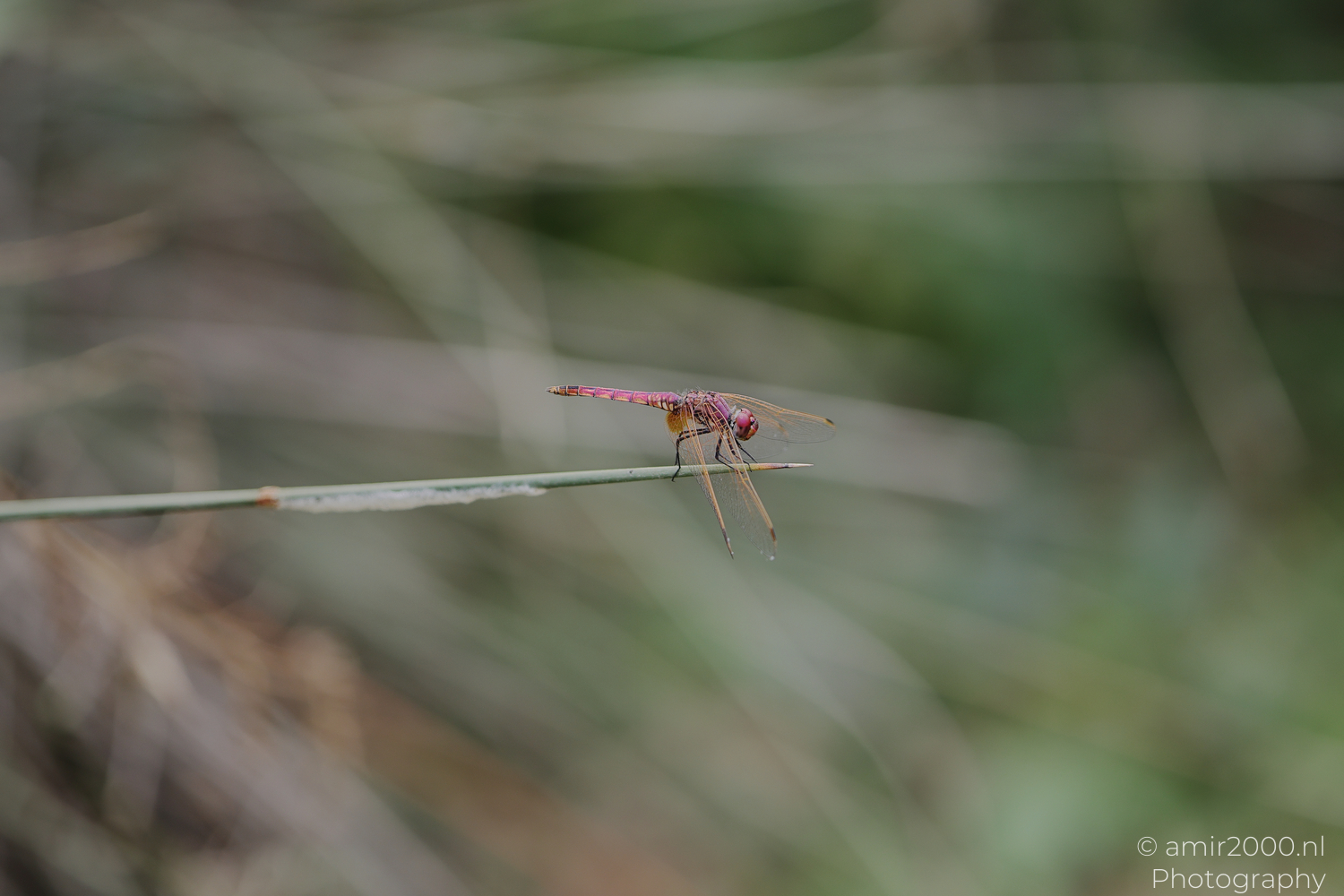
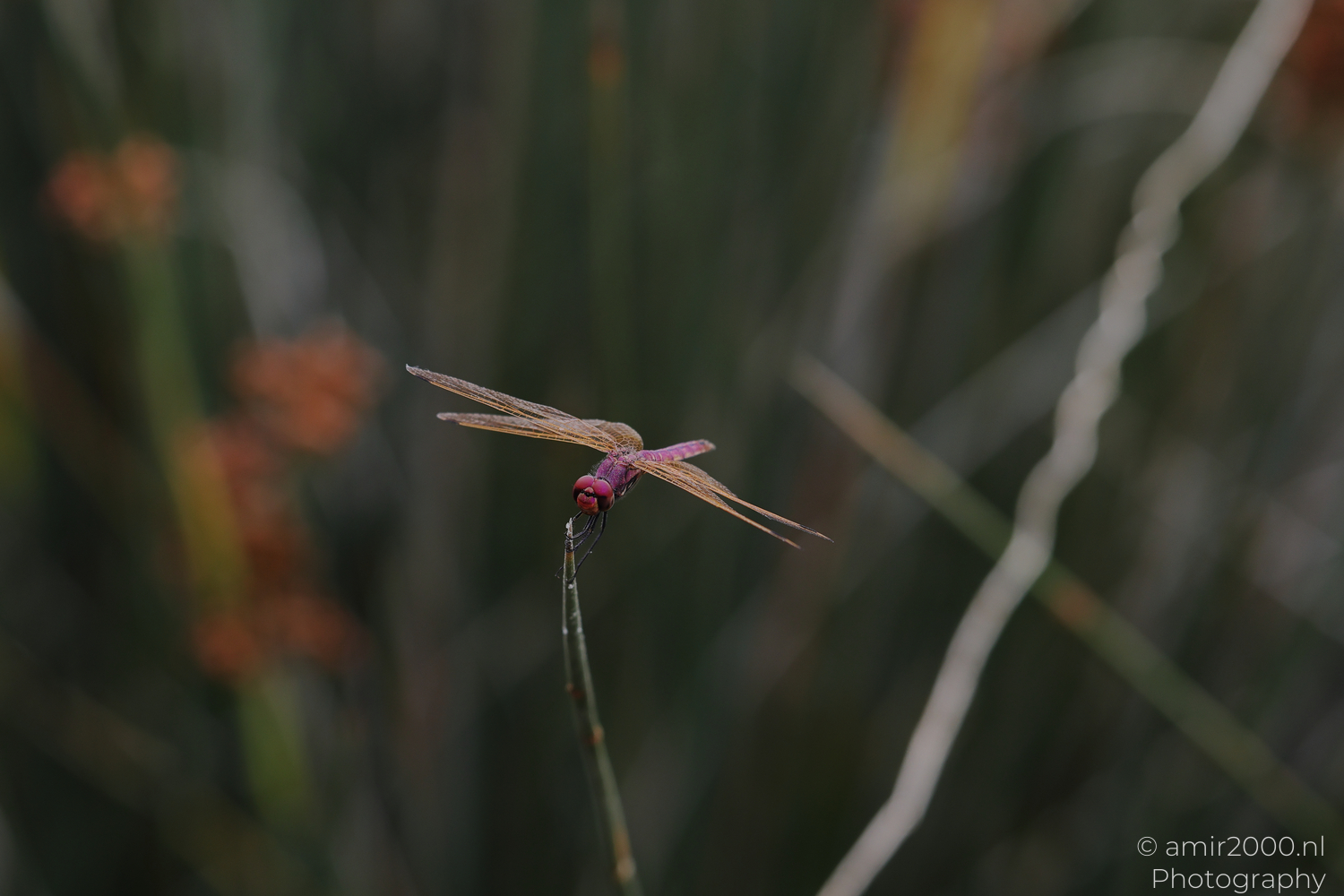
At first I followed the abdomen because its coloured sections were easy to keep in sight. That worked with a pink dragonfly stretched along a horizontal stem, but not with another facing forward from an upright stalk. Its long body compressed behind the eyes, leaving the front legs and spread wings to carry the detail. I had to switch from counting sections to tracing joints: dark knees gripping the stem, amber veins crossing clear membranes, and a narrow body disappearing behind the head. The change in posture uncovered a different structure without changing the small grip that held everything in place.
Photograph details
- Camera
- Canon_EOS_R5_Mark_II
- Lens
- RF100mm F2.8 L MACRO IS USM
- Exposure
- 1/640 sec
- Aperture
- f/2.8
- ISO
- 125
- Focal length
- 100 mm
Photograph details
- Camera
- Canon_EOS_R5_Mark_II
- Lens
- RF100mm F2.8 L MACRO IS USM
- Exposure
- 1/500 sec
- Aperture
- f/4.0
- ISO
- 125
- Focal length
- 100 mm
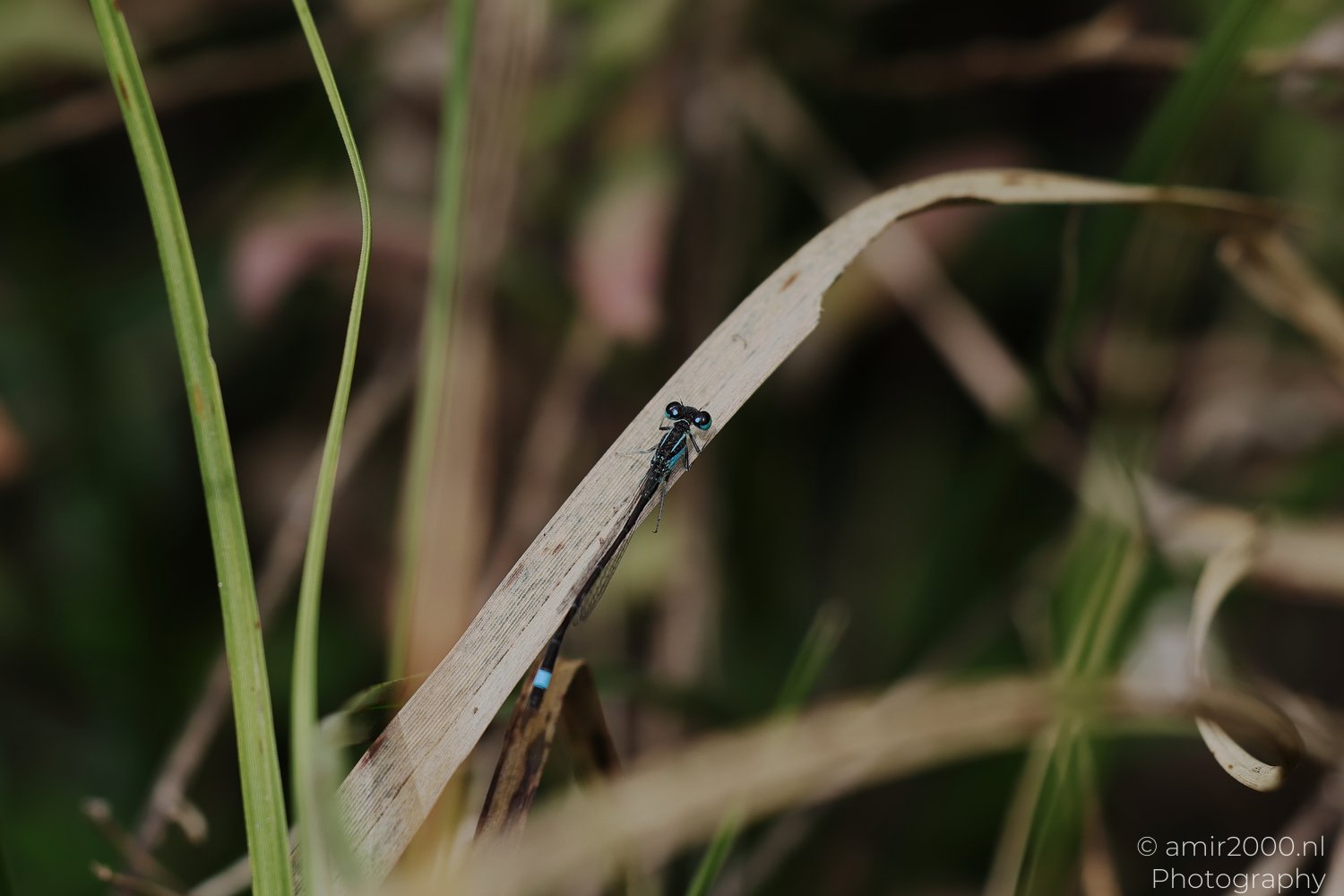
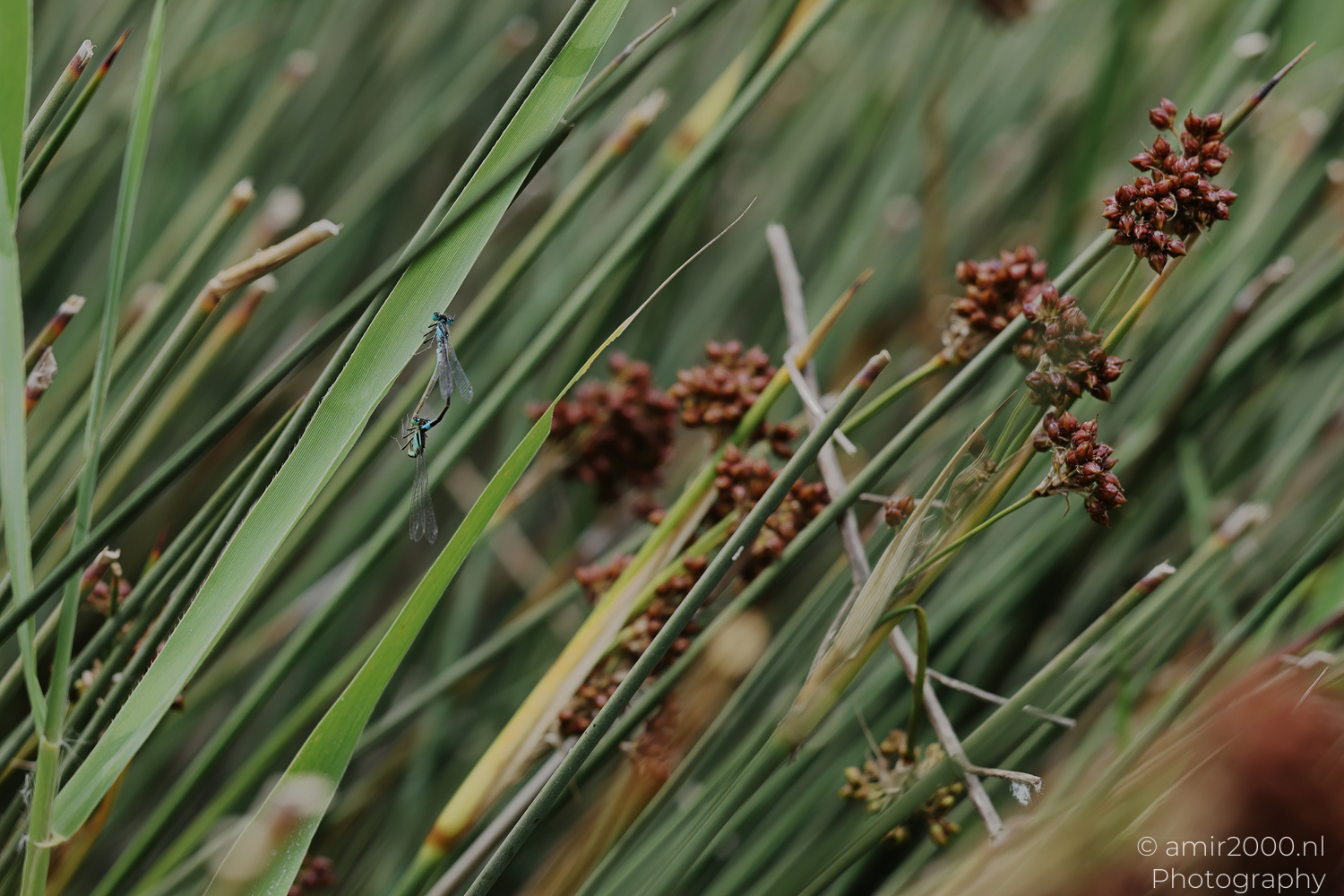
The smaller damselflies demanded a slower search. One occupied the pale curve of a dry leaf, its dark body running almost parallel to the grain. Among denser stems, two clung together beside brown seed heads, surrounded by plant lines of nearly the same thickness as their bodies. I followed the edges of leaves, the change from glossy green to dry beige, and the slight interruptions where a wing or blue segment cut across the vegetation. A shape that looked like another stem became a leg, a joint, or the narrow end of an abdomen. After I found one, the repeated lines made it easy to lose again. Colour helped, but direction mattered more: the insects appeared where the pattern of the reeds suddenly bent, forked, or stopped.
Photograph details
- Camera
- Canon_EOS_R5_Mark_II
- Lens
- RF100mm F2.8 L MACRO IS USM
- Exposure
- 1/640 sec
- Aperture
- f/3.5
- ISO
- 125
- Focal length
- 100 mm
Photograph details
- Camera
- Canon_EOS_R5_Mark_II
- Lens
- RF100mm F2.8 L MACRO IS USM
- Exposure
- 1/640 sec
- Aperture
- f/3.5
- ISO
- 125
- Focal length
- 100 mm
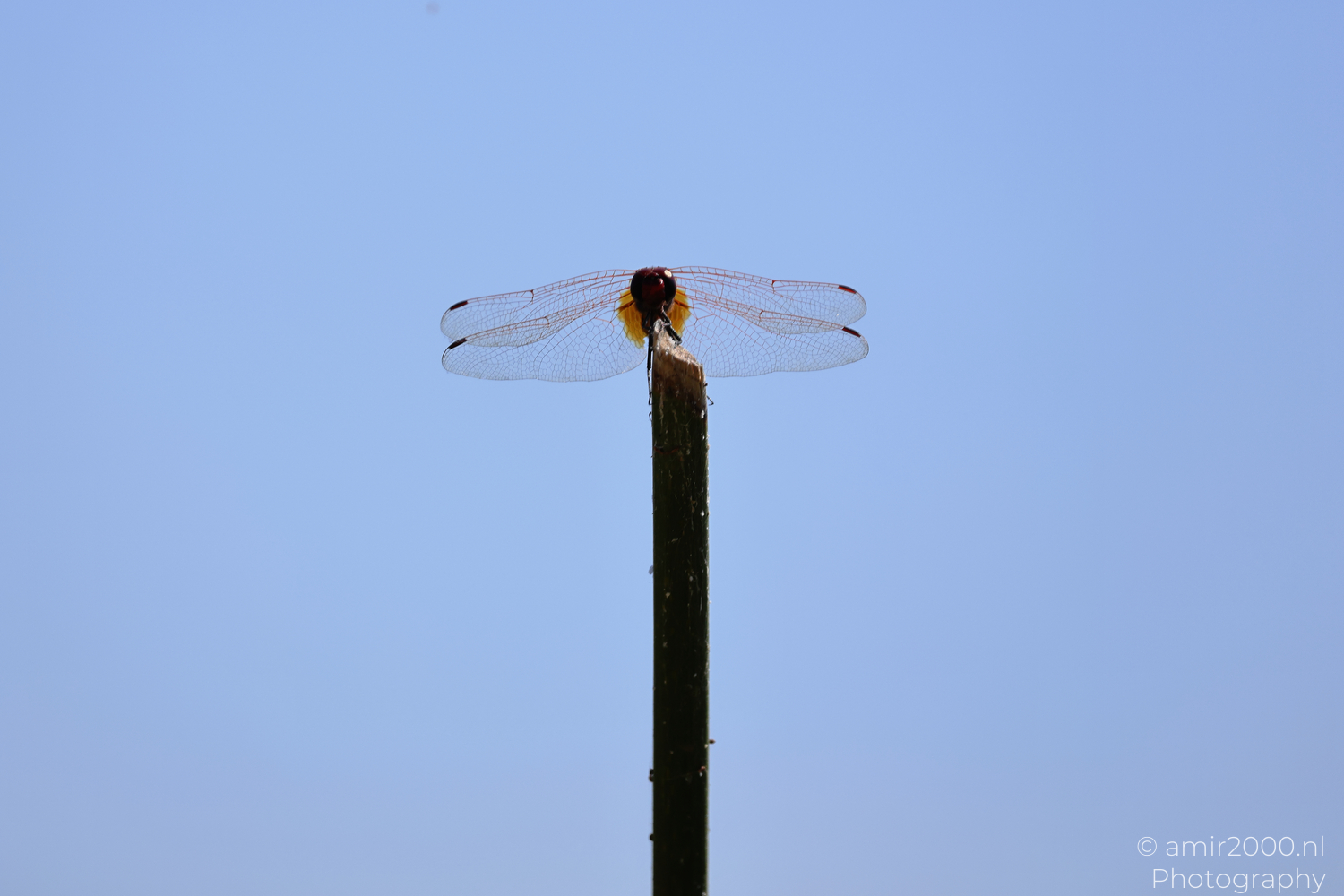
Open sky removed the tangle of reeds, but it made the dragonfly's grip look even smaller. The insect balanced on the cut end of a single vertical stem, facing straight towards me, with four wings spread across the blue. Light passed through the clear cells and left the supporting veins visible, each line joining another until the surface became a fine lattice. The body rested on a point no broader than the tip of a pencil. Near the outer edge of each wing, all that structure ended in a short dark mark, no longer than a scratch.
Photograph details
- Camera
- Canon_EOS_R5_Mark_II
- Lens
- RF100-500mm F4.5-7.1 L IS USM
- Exposure
- 1/640 sec
- Aperture
- f/7.1
- ISO
- 160
- Focal length
- 500 mm
View the macro photography gallery
Read more Macro Photography posts
Amir
Photographer, Builder, Dreamer
amir2000.nl
Your perspective
What caught your eye?
A detail in a photograph, a memory of the place, or a different way of seeing it. Leave a comment.